Why Do Certain Places Make Me Anxious Even When They’re Safe?

Person feeling anxious in a grocery store aisle
If you feel anxious in public places like grocery stores, malls, crowded lines, or parking structures, you’re not alone. Many people experience “place anxiety,” where the body reacts with panic, urgency, or shutdown in environments that are objectively safe. You might notice your heart racing, chest tightness, nausea, dizziness, or the sudden urge to escape. It can feel confusing, especially when your mind is saying, “I’m fine,” but your body is acting like danger is nearby.
Sometimes the places that trigger you are unfamiliar, like a new building with confusing hallways or a crowded event. Other times, the trigger happens in familiar places. It can be a workplace, a doctor’s office, a bedroom, or even a family member’s home. The common thread is not that the place is truly dangerous. The common thread is that your nervous system is picking up something that feels like danger. That might include blocked exits, tight spaces, loud noise, harsh lighting, too many people, time pressure, or the feeling of being watched or rushed.
When this happens, you might notice it first in your body. Your chest may feel tight. Your heart might pound. Your thoughts may start racing. You could feel shaky, dizzy, suddenly hot, or like your brain goes foggy. Some people experience an intense urge to escape and leave immediately. Others notice the opposite response. They shut down, go numb, or feel disconnected, like they are watching themselves from the outside. Both reactions can feel confusing and frustrating, especially when you find yourself thinking, “Nothing is wrong, why can’t I handle this?”
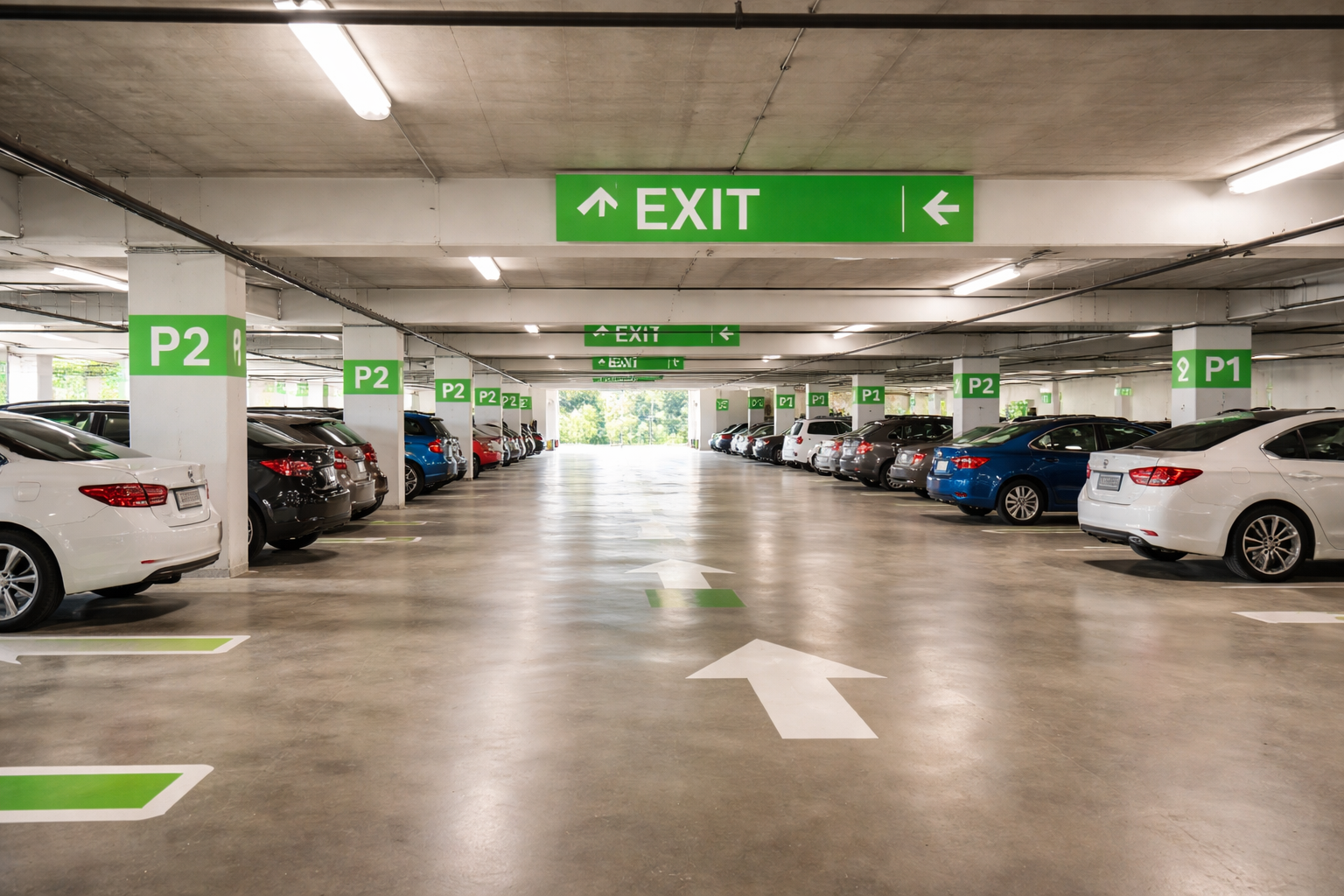
Person walking in a parking garage, environmental anxiety
If you’ve ever had shame thoughts like “I should be able to do this” or “What’s wrong with me?”, I want to pause and say this clearly. These reactions are not signs that you are broken. They are signs that your nervous system is doing what it was designed to do, protect you. Your body is trying to keep itself safe, even if the alarm is louder than the situation calls for.
Your body isn’t broken. It’s trying to protect you.
If this feels familiar, you may also relate to feeling unsafe even when nothing is happening. I explain why this occurs and how your nervous system learns safety again here: Why Do I Feel Unsafe Even When Nothing Is Happening? Your Nervous System Explained.
Your nervous system scans your environment for safety (Outside stream neuroception)
When certain places make you anxious, it can feel confusing because your mind may be saying, “This place is fine,” while your body is saying, “Get out.” One reason this happens is because your nervous system is constantly scanning your environment for cues of safety and danger, often before you consciously think about it. In polyvagal theory, this automatic safety-detection system is called neuroception. You can think of it as your nervous system’s built-in smoke alarm. Its job is to detect “smoke” quickly so it can protect you.
This article focuses on the outside stream of neuroception, which means the smoke alarm is paying attention to your environment. Your nervous system notices things like noise, crowding, movement, lighting, space, and exits. It also notices whether a situation feels predictable or unpredictable. Even if you are not consciously tracking these details, your body is. That is why your body reacts before your brain can fully explain it.
Here are common “outside stream” cues that can set off place anxiety, especially for a sensitized nervous system:
· Crowding and unpredictability: people moving quickly, bumping into you, sudden noises
· Blocked exits or confinement: long lines, narrow aisles, parking garages, elevators
· Sensory load: bright lights, loud music, overlapping conversations, strong smells
· Time pressure: feeling rushed, running late, fear of “holding people up”
· Being watched or judged: checkout lines, waiting rooms, public performance moments
· Lack of control: driving situations, traffic, construction, detours
A grocery store might feel safe logically, but your nervous system may pick up cues like bright lights, loud sounds, crowded aisles, and the feeling of being stuck in line. A parking structure might activate your system because it is enclosed, hard to exit quickly, and you may feel trapped. Driving can feel activating because there is speed, unpredictability, and the sense that you cannot simply stop and step away. Even a doctor’s office can trigger place anxiety because it involves waiting, uncertainty, fluorescent lighting, and being observed.
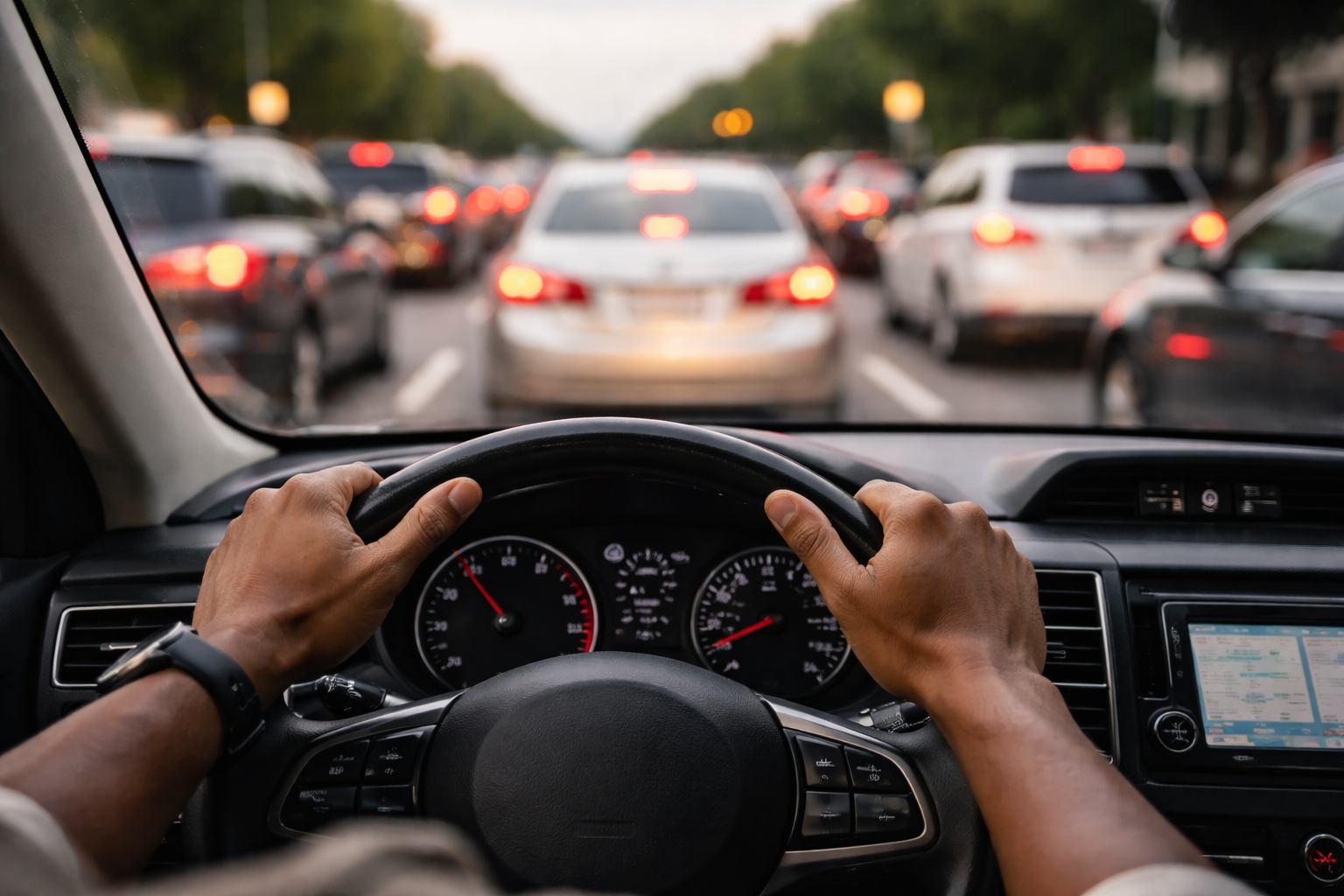
Driver holding steering wheel in traffic, nervous system activation
When the smoke alarm detects danger, your body may shift into survival mode states. Sometimes this looks like fight or flight, which can feel like anxiety, urgency, restlessness, irritability, or the need to escape. Other times, if your system feels overwhelmed or trapped, it may shift into shutdown, which can feel like numbness, fog, going blank, or disconnection. This is why someone might feel panicky in a store one day and shut down in the same store another day.
Why “safe” places can still trigger anxiety
If you’ve ever thought, “This place isn’t dangerous, so why is my body panicking?” you’re asking the right question. The answer is not that you are weak or overreacting. It’s that the nervous system learns through experience and repetition. Your body tracks patterns and stores them, often outside of conscious awareness. If your system learned at any point that it needed to stay alert to remain safe, it can keep running that protective strategy long after life becomes calmer.
This is why “false alarms” make sense. A sensitized nervous system often has a lower threshold for danger. Using the smoke alarm metaphor, it’s like having an alarm that is extra sensitive. It might go off when toast burns or when steam rises from the shower. The alarm is loud and real, but it doesn’t always mean there is a fire. In the same way, your nervous system can send a strong signal of danger in a grocery store, a parking structure, or a crowded room even when there is no immediate threat. The alarm is real, but it’s not always accurate. This can be part of a trauma response or chronic stress response.
There are also practical reasons “safe places” can feel harder on some days than others. Accumulated stress, lack of sleep, caffeine, and hunger can lower your capacity and make your system more reactive. If your body is depleted, it has less room to handle stimulation. That means bright lights, noise, crowding, and movement can feel more intense, and your system may interpret those cues as smoke more quickly. This is one reason you might be okay in a store one day and feel panicked the next.
Sometimes the trigger is even more subtle. Anniversaries, subconscious reminders, and body memory can activate the alarm without you connecting it to anything specific. You may also pick up cues you didn’t consciously notice, like a tense tone nearby, conflict energy, someone moving abruptly, or the sensation of your own heart rate increasing. Once your body is activated, your thoughts may become catastrophic, which can fuel even more fear and hypervigilance. The fear is real, but it does not always mean the place is truly unsafe.

Person waiting in a medical office, feeling uneasy
It also makes sense that avoidance can start. If a place repeatedly triggers panic or shutdown, your nervous system learns, “That place equals danger,” and avoidance becomes a protective strategy. Avoidance is not a character flaw. It is a safety strategy. The goal is not to shame yourself for avoiding. The goal is to help your nervous system learn, gradually and safely, that you have options and you can move through the world with more steadiness.
How to calm your nervous system when a place triggers you
When a place triggers your smoke alarm, it can feel like your body is taking over. Your heart races, your chest tightens, your stomach drops, and your mind starts scanning for how to get out. The goal is not to force yourself to “be calm.” The goal is to give your nervous system a clear message: I am safe enough right now, and I have options. One of the simplest ways to do that is a three-step reset using context, choice, and connection.
A quick note before you go somewhere triggering
If you already know a place tends to trigger you, you can support your nervous system before you arrive:
· Eat something or drink water if you’re depleted
· Give yourself extra time so you’re not rushed
· Decide your “exit plan” ahead of time (this creates choice)
· Choose a quieter time of day if crowds are a major trigger
Step 1: Context (what is true right now?)
· Name where you are and what time it is
· Look around and name 3 things you can see
· Feel your feet on the floor or your hand on the cart
Script: “My body is having a smoke alarm moment. I’m safe enough right now.”
Step 2: Choice (what options do I have?)
Try a micro-choice that fits the situation:
· Move toward an exit or more open area
· Step outside for 60 seconds and take a few breaths
· Go to the restroom and splash cool water on your hands
· Sit in your car for two minutes and then decide what you want to do next
· Shop during quieter hours if crowds are a big trigger
· If driving, pull over somewhere safe, unclench your hands, and reset
Even one micro-choice sends the message: “I’m not trapped.”
Step 3: Connection (who helps me feel safe?)
· Text one safe person: “Can you say hi? I’m having a hard moment.”
· Call someone for two minutes while you stand outside
· Bring someone with you to places that feel especially hard
· Use a grounding voice note you record for yourself when calm
Script: “I don’t need to solve the whole future. I need to come back to this moment.”
After the moment passes

Person practicing grounding outdoors, calming the nervous system
If you want to train your nervous system over time, end with a short “completion” step:
· “I did it. My body had a reaction, and I stayed with myself.”
· Take 3 slow breaths and notice one thing that feels steady now.
This helps your system learn: “I can move through this and return to safety.”
When therapy can help your nervous system update
Sometimes the tools in this article are enough to help you get through a moment. But many people also notice that even when they know what to do, certain places still trigger the same reaction again and again. If your world is shrinking because you avoid stores, driving, crowds, appointments, or certain rooms, it may be a sign that your nervous system needs more than coping strategies. It may need deeper updating.
Trauma-informed therapy is not about erasing your memories or forcing you to push through fear. It is about helping your nervous system learn safety again so your body does not keep reacting as if danger is present. Over time, the goal is for your body to feel steadier in environments that currently set off the smoke alarm.
EMDR can be one option within trauma therapy when it is clinically appropriate. EMDR helps the brain process stuck memories so the nervous system does not keep reacting as if the past is happening now. Many people find that when underlying memories and patterns are processed, certain places start to feel more neutral, less threatening, and less activating over time.
If what you read here resonated, you do not have to figure this out alone. You can start with whichever next step feels most supportive:
· Start Here: Stuck in Survival Mode
· Flashbacks, Triggers & Dissociation
Your nervous system learned protection. It can learn safety too.
If you would like to talk about what you are experiencing and decide what kind of support fits best, you are welcome to schedule a free consultation.
Frequently Asked Questions
Why do I feel anxious in grocery stores or crowded places?
Crowds, noise, bright lights, and unpredictable movement can activate your nervous system’s outside-stream safety system, even when the place is objectively safe.
Why do I feel trapped in lines or enclosed spaces?
When exits feel blocked or movement feels restricted, your nervous system can interpret the situation as danger and shift into fight, flight, or shutdown.
Why does driving trigger anxiety?
Driving includes speed, unpredictability, and limited ability to pause. For a sensitized nervous system, this can feel like loss of control, which activates survival mode.
Why does it feel worse on some days than others?
Sleep, stress, caffeine, hunger, and accumulated overwhelm can lower your nervous system’s capacity. When capacity is lower, the smoke alarm goes off more easily.
Is place anxiety a trauma response?
It can be. Place anxiety can develop after trauma or chronic stress, especially if the nervous system learned to stay alert to feel safe.
How can I stop avoiding places?
Start small and prioritize safety. Avoidance is a protective strategy, and therapy can help you expand your world gradually without forcing exposure.
Can EMDR help with place triggers?
For many people, yes. EMDR can help process stuck memories so the body does not react as if danger is happening now. Find out more about EMDR here.
