Why Does My Body React Before I Can Think?
If you experience sudden panic, tight chest, nausea, or numbness before you can explain why, you’re not broken. Your nervous system is reacting fast to protect you. For many people, this is why the body reacts before the brain can catch up, and why you might feel unsafe for no reason even in ordinary moments.
When your body reacts before your brain can catch up

Have you ever had your body react before you could even explain what was happening? Maybe your chest tightens, your heart starts racing, your stomach drops, or your mind suddenly feels flooded with fear. It can feel like it comes out of nowhere, especially when nothing “bad” is happening. You might look around and think, “Why is my body acting like I’m in danger?” That confusion can be exhausting, and for many people it can also bring shame. You may tell yourself you should be fine, or that you are overreacting, or that something must be wrong with you.
For some people, these reactions show up as panic-like symptoms. You might notice nausea, sweating, shaking, dizziness, or a wave of heat moving through your body. For others, the reaction is quieter but just as intense. You might suddenly feel numb, spaced out, foggy, or disconnected, like you cannot fully access your thoughts or emotions. You may even feel a strong urge to escape, avoid, or shut down, even if you are in a completely safe setting. Afterward, you might replay the moment trying to make sense of it, which can lead to even more anxiety and hypervigilance.
What makes this especially hard is that these reactions often happen before your thinking brain has time to catch up. The body responds first, and then the mind tries to explain it. That can create a loop where the body feels activated, and the brain starts searching for reasons, scanning for danger, or jumping to worst-case scenarios. Over time, this can make everyday moments feel unpredictable because you never know when your system will get set off.
If this is something you experience, I want you to know you are not alone. And you are not broken. In many cases, this is not your body betraying you. It is your nervous system doing what it was designed to do, protect you. The goal is not to shame these reactions. The goal is to understand them so you can begin helping your body feel safer and more grounded again.

Your body isn’t broken. It’s trying to protect you.
If you often feel unsafe even when nothing is happening, I explain why this occurs and how your nervous system learns safety again here: Why Do I Feel Unsafe Even When Nothing Is Happening?
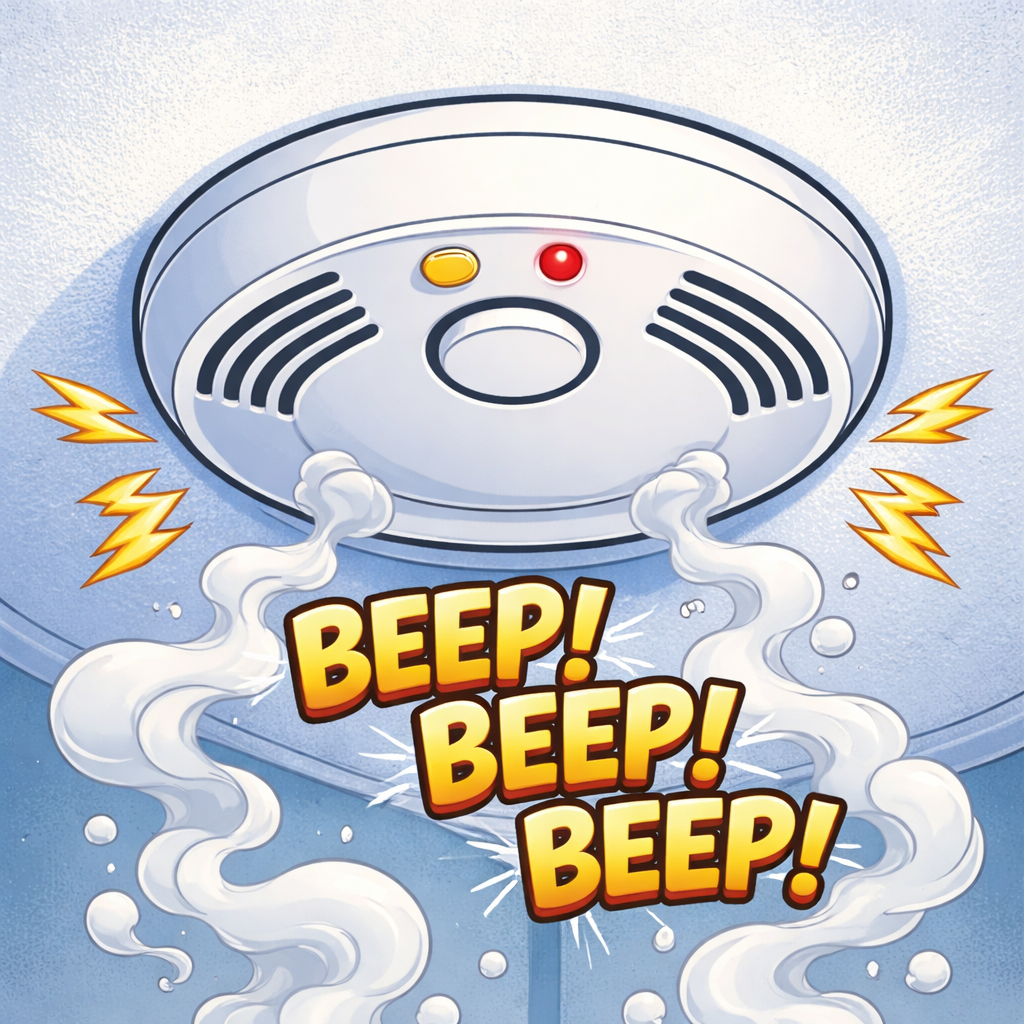
Neuroception: your nervous system’s “smoke alarm”
Your nervous system has a built-in “smoke alarm” that is always asking one question: Am I safe right now, or am I in danger? This alarm is designed to work quickly, often before you consciously think things through. In polyvagal theory, this automatic safety-detection system is called neuroception. A simple way to understand neuroception is this: it is the part of your nervous system that detects safety or danger before your thinking brain catches up.
This matters because it explains why your body can react first. Neuroception does not only respond to what you see or hear. It also listens to cues inside your body, which is the focus of this article. The “inside stream” means your nervous system pays attention to internal signals like your heartbeat, breathing, muscle tension, nausea, dizziness, warmth, and even the speed of your thoughts. If your heart starts pounding or your chest tightens, your system may interpret that internal change as “smoke,” even if there is no actual danger in the room.
This is why the body reacts before the brain has time to make sense of it. Your body senses a shift, and then your mind starts searching for an explanation. You might notice a tight chest and then think, “What’s wrong? What if something bad happens?” The thoughts often come after the body activation, because the brain is trying to make meaning of what the nervous system is already doing.
A helpful metaphor is to think of your nervous system like a fast security system. It is designed to react first and explain later. Speed matters because your nervous system would rather protect you quickly than wait for certainty. The downside is that when the system becomes more sensitive, it can prioritize speed over accuracy.
You can picture it like a smoke alarm that goes off when toast burns. The alarm is loud and real, but it does not always mean there is a fire. In the same way, an adrenaline spike, a sudden sensation in your body, or an internal cue you barely noticed can set off your alarm. When neuroception detects danger, your body can shift into survival states like fight or flight (anxiety, urgency, the need to escape or fix something) or shutdown (numbness, disconnection, going blank). These states are not choices you are making. They are protective responses. For many people, this can be part of a trauma response or chronic stress response.
Why your body can feel unsafe even when you’re safe
One of the most frustrating parts of nervous system symptoms is how random they can feel. You might be having a normal day, and then your body suddenly reacts as if something is wrong. When that happens, many people assume they are overreacting or that something must be broken inside them. In reality, the nervous system learns through experience and repetition. It is constantly tracking patterns and storing them, even when you are not consciously aware. If your system learned at any point that it needed to stay alert to remain safe, it may continue responding that way even after your life becomes more stable.
This is also why a sensitized nervous system can have a lower threshold for danger. Think again of the smoke alarm metaphor. If the alarm has become extra sensitive, it can go off from a small amount of smoke. The alarm is real, but it’s not always accurate. Your nervous system may send a strong signal of danger even when you are not in immediate threat.

There are also very practical reasons symptoms can feel like they come out of nowhere. Everyday factors can make the nervous system more sensitive, such as accumulated stress, lack of sleep, caffeine, or even hunger. If your body is already depleted, it takes less to tip you into anxiety or shutdown. Sometimes the trigger is more subtle. Anniversaries, subconscious reminders, or body memory can activate the alarm without you connecting it to anything specific. You may also pick up cues you didn’t consciously notice, such as a shift in someone’s tone, a crowded environment, a certain smell, or a small internal sensation like a tight chest that your brain interprets as danger.
This is often how the cycle happens: your body reacts first, and then your mind tries to explain the reaction. You feel a sensation, and your thoughts immediately jump to catastrophic conclusions. “Something bad is about to happen.” “I can’t handle this.” “What if I lose control?” These thoughts can feel convincing, but they are often the brain trying to make meaning of a nervous system alarm. In other words, the catastrophic thought may be a reflection of your body state, not proof that something terrible is actually happening.
How to calm your nervous system when it reacts fast
When your body reacts before your brain can catch up, it can feel scary and out of your control. The goal in that moment is not to force yourself to “calm down” or to figure everything out immediately. The goal is to send your nervous system a simple message: I am safe enough right now. One of the most practical ways to do that is with a quick 3-step reset using context, choice, and connection.
Step 1: Context
What do I know is true right now?
Try this orienting practice:
Name the room you are in
Say the date or time of day
Look around and name 3 things you can see
A phrase that tends to work without feeling cheesy is:
“My body is having a smoke alarm moment. I’m safe enough right now.”
Step 2: Choice
What options do I have in this moment?
Try a micro-choice:
Step outside for 60 seconds and feel the air
Drink water or eat something small if you are depleted
Sit near an exit in a crowded space
Pause a conversation by saying, “I need a minute”
Change your position by standing up, stretching, or walking to another room
Step 3: Connection
Who feels safe to me?
A connection step that often feels manageable:
Text one safe person: “Can you say hi? I’m having a hard moment.”
Call someone for two minutes, even if you don’t explain everything
Listen to a grounding voice note you record for yourself when you are calm
Bring it into therapy if these reactions keep happening

Another simple phrase to interrupt the spiral is:
“I don’t need to solve the whole future. I need to come back to this moment.”
When your nervous system keeps reacting, therapy can help it update
Sometimes the tools in this article are enough to help you settle in the moment. At the same time, many people find that even when they know what to do, their nervous system still gets set off again and again. If your smoke alarm is highly sensitive, it may need more than coping strategies. It may need deeper updating.
This is where therapy can help. The goal of trauma-informed therapy is not to erase your memories or force you to “get over it.” The goal is to reduce the intensity of body reactivity and increase your ability to feel safe in the present. Over time, therapy helps your nervous system recognize that the danger has passed, so your body does not have to keep responding as if it is still happening.
You may benefit from support if these reactions are happening frequently, feel intense, or interfere with your life. Some signs include feeling unsafe for no reason on a regular basis, living in hypervigilance, experiencing panic or shutdown, having trouble sleeping, feeling easily triggered in relationships or conflict, or noticing that your body reactions are impacting work, parenting, intimacy, or your ability to relax.
EMDR can be one option within trauma therapy when it is clinically appropriate. EMDR helps the brain process stuck memories so the nervous system does not keep reacting as if the past is happening now. Many people find that EMDR helps reduce triggers and body-based responses over time, especially when it is paced carefully and grounded in safety.
If what you read here resonated, you do not have to figure this out alone. You can start with whichever step feels most supportive right now:
If you would like to talk about what you are experiencing and decide what kind of support fits best, you are welcome to schedule a free consultation.
Your nervous system learned protection. It can learn safety too.
Frequently Asked Questions
Why does my body react before my brain?
Your nervous system has a fast safety system that can detect danger cues before conscious thought. This is why physical sensations can show up first, and thoughts come second.
Is this anxiety or a trauma response?
It can be either, and sometimes both. What matters is that your symptoms make sense from a nervous system perspective, and support can help your system recalibrate.
Why do I get chest tightness or nausea out of nowhere?
Body sensations can be interpreted by the nervous system as “smoke,” especially when your system is stressed, sleep-deprived, or sensitized by past experiences.
What if I shut down or dissociate when I’m overwhelmed?
Shutdown and dissociation can be protective responses when the nervous system feels overwhelmed. Therapy can help you build stability and learn to return to the present more easily.
Can EMDR help with body-based triggers?
For many people, yes. EMDR can help process stuck memories so the body does not react as if the danger is still happening now. Want to learn more about EMDR? Click here.
